Curriculum
Our curriculum is designed to meet the individual needs of our pupils. As an Academy, we understand that pupils within our setting have a range of developmental levels and varying degrees of complexity of need. To ensure our offer is relevant, curriculum arrangements are made acknowledging the following principles.
 |
Our offer is developed into learning pathways, ensuring all pupils access the most appropriate curriculum or provision that meets their individual needs. |
 |
Every pupil has the right to a high-quality education that meets their individual needs. Our focus on accessible, adapted provision ensures that barriers to learning, whether physical, cognitive, linguistic or socio-economic, are identified and overcome, promoting equity, inclusion and engagement. |
 |
We aim to create a dynamic classroom environment where learning ensures pupils feel inspired and empowered. Our curriculum is built to capture pupils’ interest and motivate them to learn. Using innovative and creative teaching and learning approaches to capture engagement. |
 |
A curriculum offer that fosters direction, helping pupils with personal development focused on personal growth, future opportunities and a role in society. Therefore, connecting knowledge and skills to real world experiences. |
 |
We aim for our pupils to be as independent as possible, equipped with the skills and confidence to tackle challenges, make decisions and take control of their own learning. |
 |
By appreciating and planning for the challenges our pupils will face, as they transition throughout education and into adult life, our offer has a strong focus on preparation for adulthood through focused teaching of life skills, the world of work, a healthy and safe lifestyle, social interaction and community engagement. |
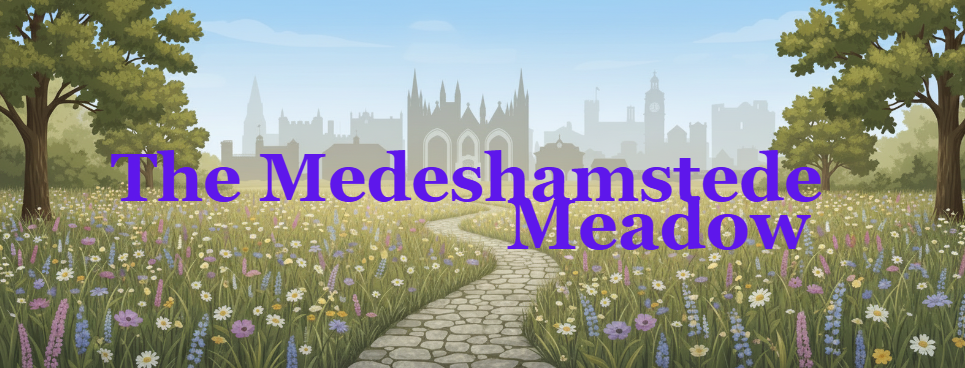
A curriculum built around the idea of a meadow. A meadow represents safety, belonging, diversity and growth. Every pupil grows in their own unique way, but all pupils need the right conditions to flourish. Throughout their journey, pupils draw upon the opportunities, experiences and support within the meadow to thrive and achieve. Our three pathways are carefully designed to provide the curriculum conditions each pupil needs to learn, grow and make meaningful progress.
The Meadow Pathways
At Medeshamstede, we are continually reviewing and refining our curriculum to ensure it meets the needs of all our learners and enables them to reach their full potential. Through a combination of Formal, Semi-Formal and Pre-formal models, teachers are able to plan in direct response to a pupil’s individual needs and interests, taking account of their barriers to learning.
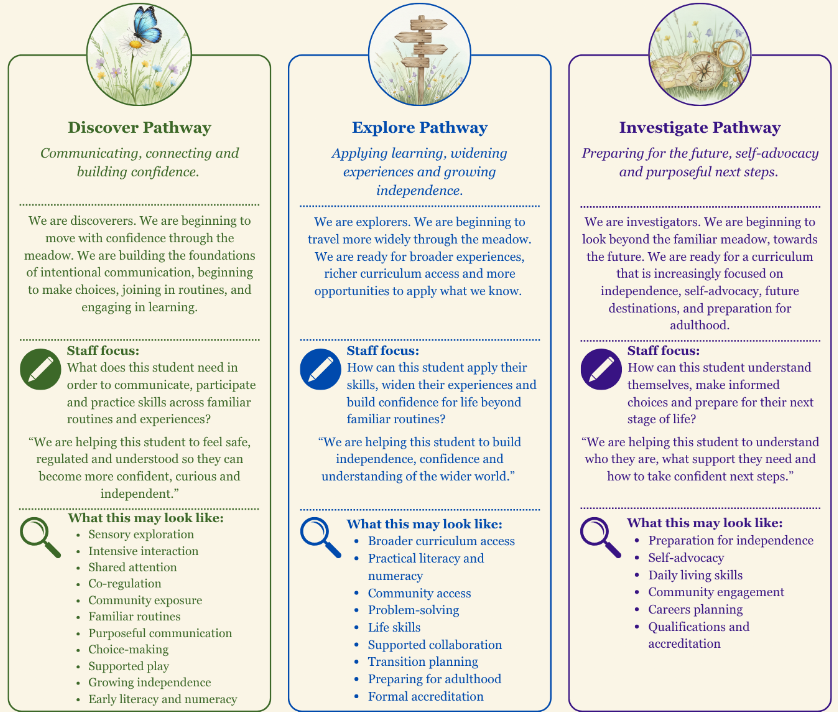
The Meadow Journey
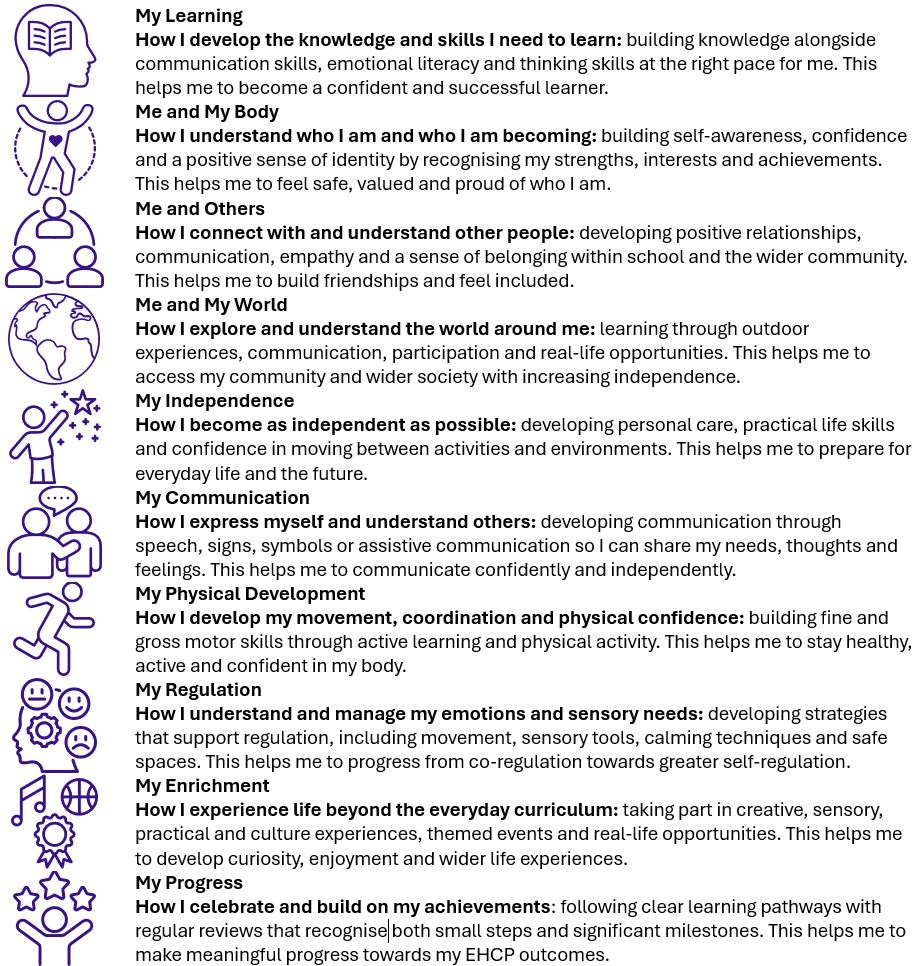
Wider opportunities
To compliment our core curriculum offer, we provide a number of wider and extracurricular opportunities.
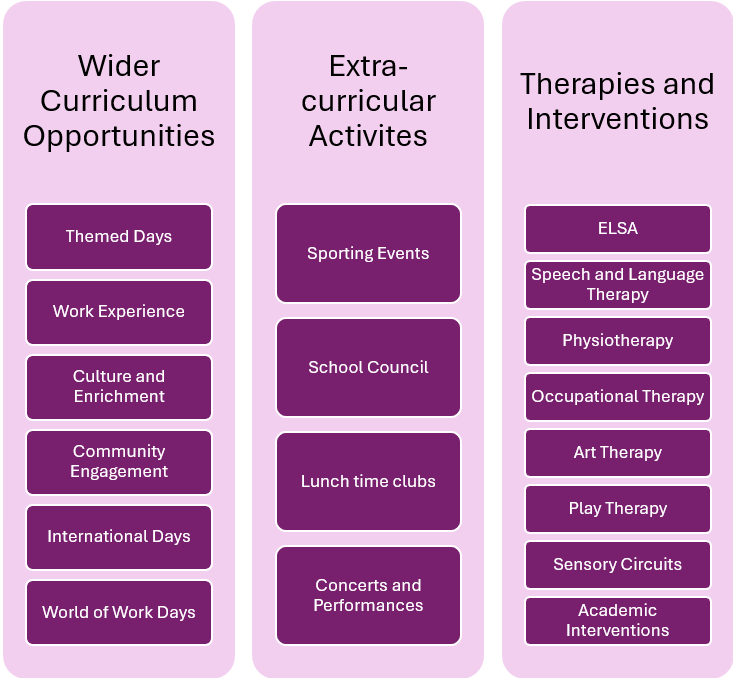
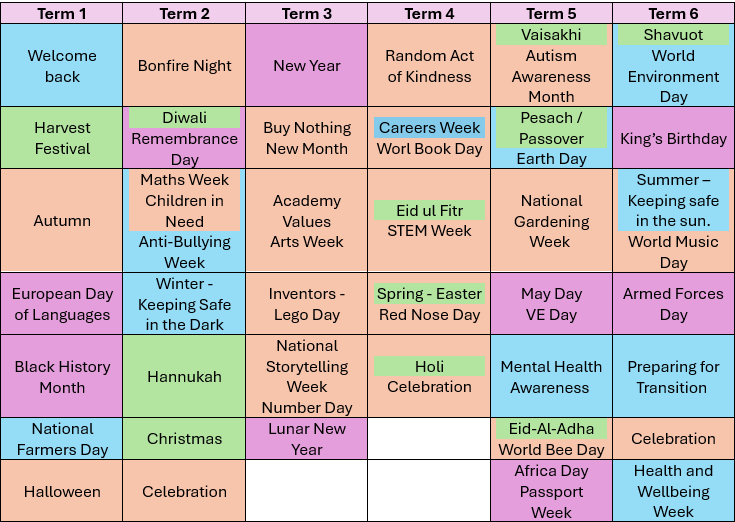
Culture and Enrichment timetable
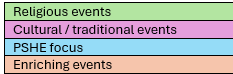
Each week a culture and enrichment theme is planned to explore religious events; cultural or traditional events; personal, social, health and economic themes and/or other enriching events.